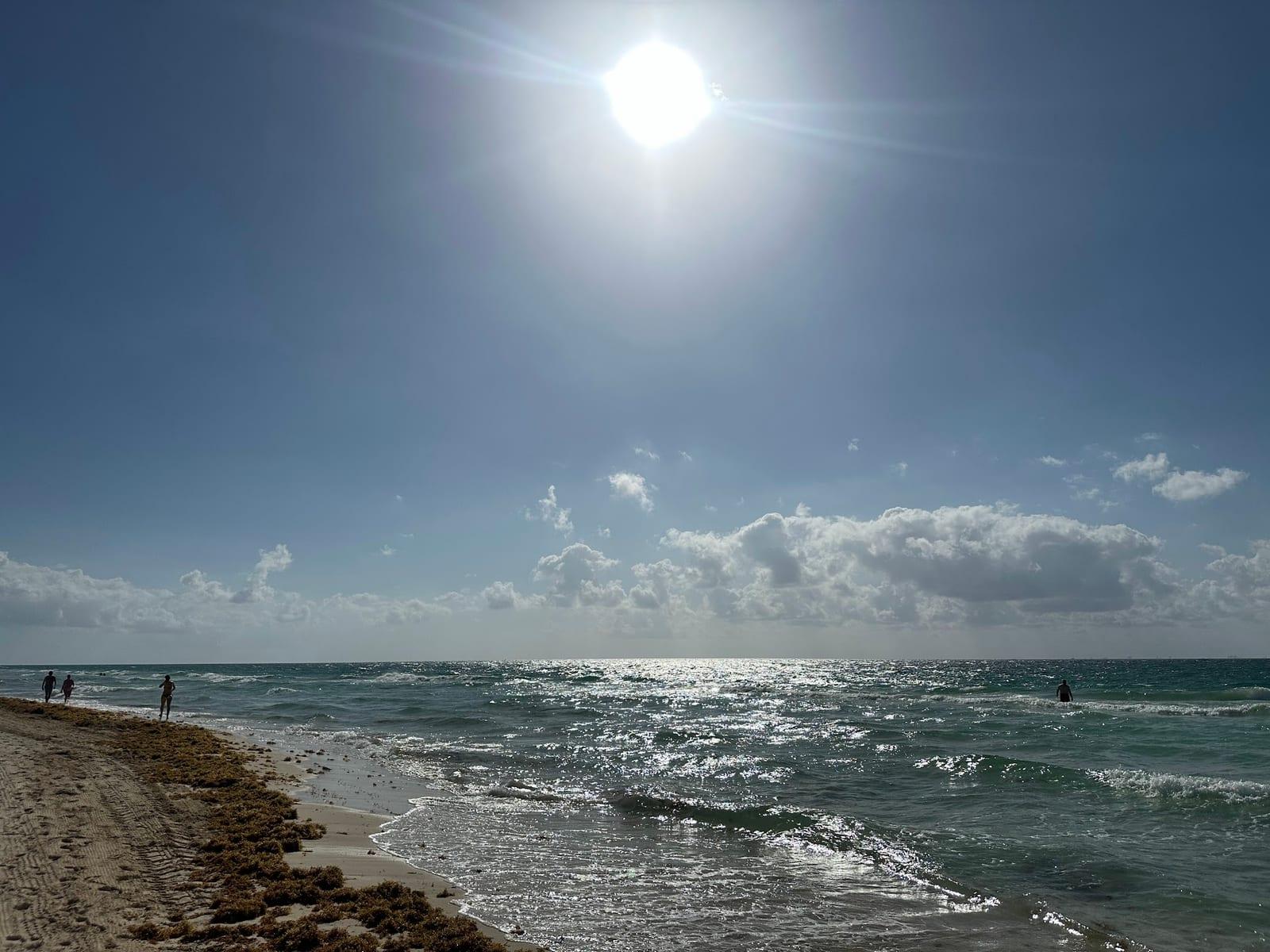
Every sargassum season in the Riviera Maya brings back the same conversation: what can we do with the tons of seaweed washing up on our beaches?
People talk about fertilizers, bioplastics, compost, construction blocks, biogas, cosmetics, crafts. Some ideas may have potential. Others may only work as small projects. But before falling in love with any solution, it's worth asking a simpler question: is the whole chain profitable?
What almost nobody wants to ask
Finding a use for sargassum is one thing. Paying for its collection, transport, cleaning, drying, processing, storage, and commercialization is another.
That's where the real challenge sits.
Sargassum doesn't only need good ideas. It needs models that work in reality: with costs, buyers, logistics, operations, and scale. It needs to know who pays for removal, who transforms it, who buys it, and which industry can use it without depending exclusively on a seasonal raw material.
That last part matters. Sargassum arrives from March to October. What does a processing plant do the other five months of the year? Any solution that ignores seasonality is incomplete from day one.
Who solves what
Government has an important role: coordinate, regulate, measure, permit, and protect ecosystems. That's not up for debate.
But productive ingenuity — the kind that turns a problem into a profitable operation — usually comes from somewhere else. It comes from those who work, invest, operate, and face the problem every day.
Hoteliers who see sargassum on every season's balance sheet. Fishermen whose work area becomes unusable. Logistics operators with fleets that could move it if the numbers add up. Builders exploring new materials. Farmers looking for inputs. Tech developers thinking in sensors, prediction, automation. Investors with capital waiting for a solid business case.
These people don't have all the answers. But they're forced to think about efficiency, costs, clients, and execution. That discipline is what separates a pretty idea from a viable business.
The right question
The question shouldn't only be:
What can we do with sargassum?
But:
What value chain can make removing it profitable?
Maybe sargassum won't be solved by a single miracle product. Maybe the answer lies in several connected solutions: energy, compost, materials, waste management, tourism, logistics, technology, circular economy, business collaboration.
But getting there requires more practical conversations. Fewer isolated brainstorms. More numbers. More operations. More real pilot tests. More entrepreneurs thinking together.
Where Kiin Hub fits in
A business community isn't only for sharing an office. It's for bringing perspectives together, sparking ideas, and connecting people who can turn local problems into real opportunities.
Sargassum is one of those problems.
If you work in tourism, construction, logistics, sustainability, agriculture, energy, technology, or investment, this conversation is also yours. Not because you have to solve it alone, but because real solutions almost always come from people with different perspectives comparing notes.
Maybe the right question to start isn't who's going to solve it for us, but who's willing to think about how to make it viable.
This piece was inspired by a reflection published by Reference Real Estate on sargassum and the Riviera Maya economy. If you care about the subject from a real estate and regional economy perspective, their analysis is worth reading.
Kiin Hub holds space for business conversations that combine collaboration, profitability, and execution. If you'd like to see where these dialogues happen, come grab a coffee any morning 8am-5pm. Bookings: +52 990 403 6041.
Share this article