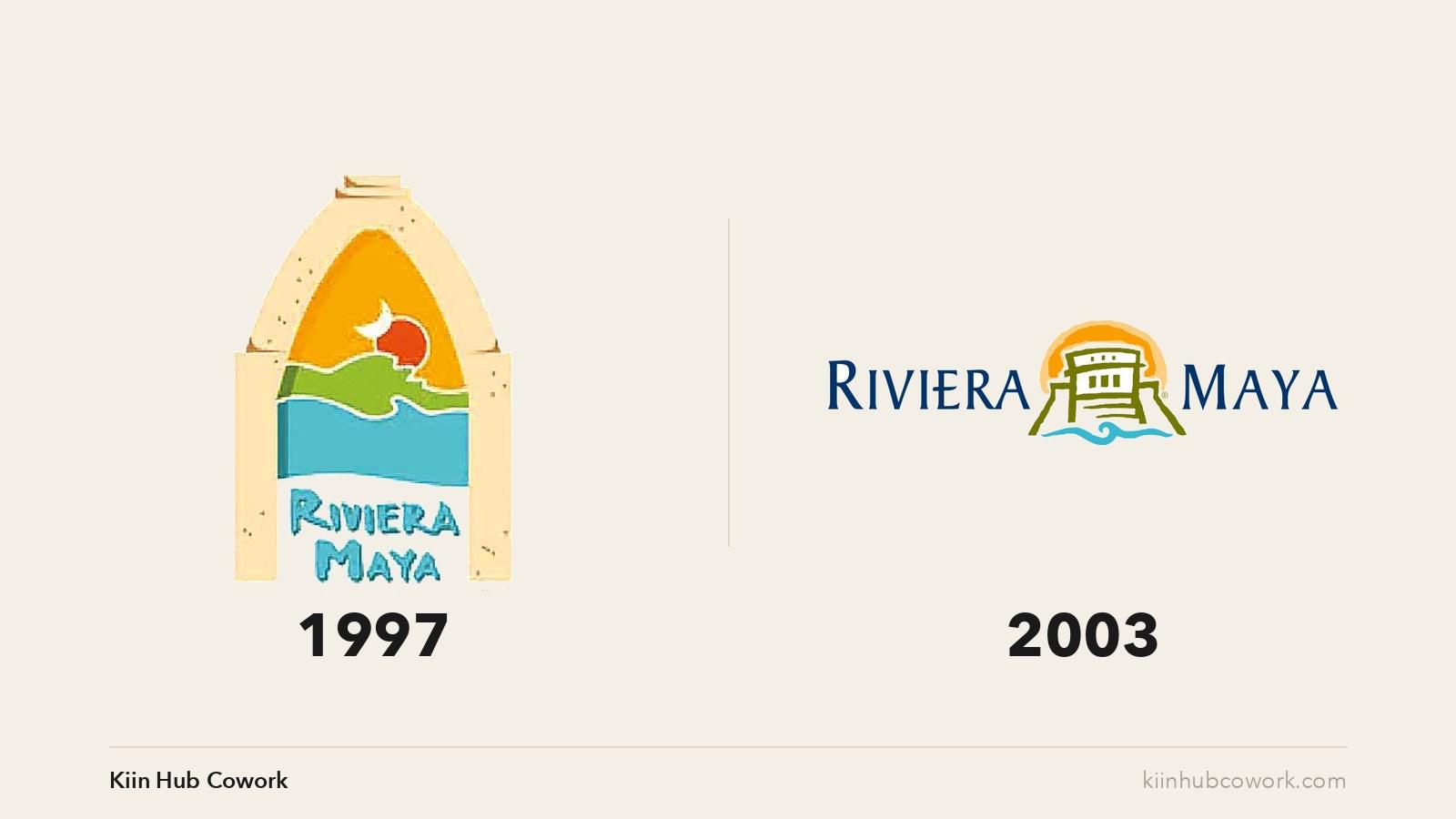
Before 1997 this coast was called Corredor Turístico Cancún-Tulum, the Cancún-Tulum tourist corridor. The name that changed it came out of twenty four focus groups and four hundred interviews. It is worth seeing how they did it.
In the mid nineties, the stretch of coast where we are today had the name of a government office: Corredor Turístico Cancún-Tulum, the Cancún-Tulum tourist corridor. That is what the tourism ministry, the state government and the planning maps called it.
By the middle of that decade it had a little over 3,000 hotel rooms, against Cancún's 20,000. Playa del Carmen was mostly the pier you crossed from to get to Cozumel.
Thirty years later, this stretch has more rooms than Cancún.
What they did to get there is a business case that works for anyone who has to decide what their company is called, how it presents itself and who it talks to.
They started with the problem, not with the name
The hotel owners in Playa del Carmen did not want to change the name for looks. They had a concrete problem.
"Cancún-Tulum corridor" meant nothing to a German or a French traveler. Worse: it cast them as the road between two places that did have names of their own.
The marketer they hired, Servando Acuña, remembered what they told him in the first meeting: "No nos gusta la palabra corredor, no somos un corredor." We do not like the word corridor, we are not a corridor.
That is the first lesson and the one most often skipped. Before thinking about the name, they were clear about what problem the current one was causing.
They took stock of what was actually there
Acuña went down the coast and documented 22 sites between Puerto Morelos and the Sian Ka'an reserve, some 125 kilometers of shoreline.
Then he looked at the competition around the Caribbean. And out of that came a decision that was not obvious: the destination should not sell itself as a cruise stop, because someone else was already doing that better.
That is what a benchmark is for, and it tells you as much about what to match as about what not to attempt.
And then they asked
Twenty four focus groups, mostly with European tourists, and four hundred interviews.
This was not an opinion poll about pretty names. It was research into what each word evoked in each market. And that is what explains the result.
To the French, the word Riviera suggested sophistication and luxury. Germans study Maya culture in secondary school, so "maya" meant something concrete to them. And Mexicans were drawn to the link with a pre Hispanic civilization.
One word for each market, all in the same name.
There was a practical reason to ask Europeans above all: close to 80% of the visitors on this coast came from there. Cancún had taken the American market.
They knew who they were talking to before deciding how to talk to them.
The meeting did happen, and that is why it worked
Here is the detail I like most in the whole story.
There was a meeting to decide the name. What happened, in Acuña's own words: "Cuando le presenté los resultados al comité, ya ni siquiera hubo discusión." When I showed the committee the results, there was not even a discussion.
The meeting did not choose the name. It confirmed what customers had already said.
That is the difference between a meeting where opinions get argued and one where evidence gets reviewed. And anyone who has sat in both knows which one ends sooner.
They registered before they announced
The brand was presented in public on November 28, 1997, at Xcaret.
The application at IMPI, Mexico's trademark and patent office, had gone in on September 9. Two and a half months earlier.
The title came later still: the trademark was granted on December 15, two and a half weeks after the launch. So they announced with the filing in progress, not with the paper in hand. Which is exactly the point: what protects you is the filing date, not the grant date.
For a small business this is the most actionable lesson of them all. If you have a name you think is worth something, register it before you announce it, not after it starts working.
It costs little and it saves an expensive conversation.
Initiative first, institutions after
The order matters too.
The hotel owners did not wait for someone to solve the problem for them. They formed a committee with no formal standing, paid for the study out of their own pockets and got to work.
Only once they had the result did they go to the authorities, and in that order: the mayor first, then the governor, and the federal tourism secretary last. They arrived with a finished proposal and with evidence, not with an idea.
A promotion trust already existed by then, and it was the one that registered the trademark. What came after was the institutional backing and the budget that paid for the campaigns for years.
But the initiative and the cost were the business owners'. Not the other way around.
What did not work out
Worth telling, because it leaves something too.
The brand never became the name of the municipality. From 1999 on there were attempts to rename Solidaridad as Riviera Maya, and none prospered.
The end came in 2025, when the state Congress voted unanimously to name the municipality Playa del Carmen. They picked the historical name, not the brand.
And there is a useful distinction there: a brand designed to sell abroad is not necessarily the name people want for home.
They do different jobs, and it pays not to mix them up.
What lasted and what did not
There is a footnote worth adding.
The name is still standing thirty years later. The logo is not: in 2003 a designer was asked for a new proposal, and the trust ended up filing that design with IMPI. The 1997 one lasted six years.
The chronicle goes into detail about how the name was researched, and says nothing of the sort about the logo. It may simply never have been written down. But what lasted thirty years was the part they did ask about.
What this says to a business here
Most of us choose the name, the message and the words on our website from the inside. With our trade's vocabulary, with what sounds good to us, and with the opinion of two or three people close by.
They did it from the outside, in the customer's words.
A small business does not need four hundred interviews. But it can do the small version of the same thing:
Ask ten customers what they typed into Google when they were looking for what you sell. The words they use are almost never yours.
Look at what the best in your line are doing, even in another country, to learn what to match and what not to attempt.
And get to the decision with that in hand, not with an opinion.
Thirty years later, the name still works. And what made it work was not creativity: it was having asked first.
At Kiin Hub we have the Mesa Kiin: putting your case in front of people who know different things. Tax and accounting, labor, value proposition, process and technology. If you are about to decide how your business presents itself and want another set of eyes on it, bring it.
Data: Fernando Martí's account in Fantasía de Banqueros, the trademark file at IMPI, the Congress of the State of Quintana Roo and designer Jorge Carlos Álvarez's portfolio on Behance.
Share this article