It changed hands, the group that expanded it did not survive the 1994 devaluation, a hurricane took the beaches and the sargassum arrived to stay. It is still the most established gated community in the city. It is worth understanding why.
The development started in 1979, under Fernando Barbachano Herrero, on twenty five hectares. Barbachano sold the project to Aircoa, an American hotel company, and in 1994 it was bought by a group from Guadalajara that built marinas, hotels and golf courses. That group put up Phase 2, with the golf course that opened that same year, designed by Robert von Hagge, and the large hotels around it.
That same December the peso was devalued. The group never recovered: it took ten years to come apart, and in 2004 it sold nine hotels for a hundred million dollars.
What stands out is that the asset survived all of it. The change of hands, the fall of the group that expanded it, and a decade of uncertainty about who would end up with what.
And then it survived more. Wilma, which parked over the peninsula in October 2005 and took the beaches along the coast. And the sargassum, which arrived in 2015 and stayed.
Today, in that same gated community, there are beachfront houses in the seven figures in dollars and a dozen hotels running.
If you run a business and you are deciding where to put it, that staying power says more than any projection.
What fell apart is what was being sold
This is the part that stands out most.
Everything that went wrong in these forty years has to do with the beach, which was exactly the original selling point. The sargassum, the erosion, the hurricanes. The brochure promised beach, and the beach is what moved.
What held the value is what nobody mentioned in 1979.
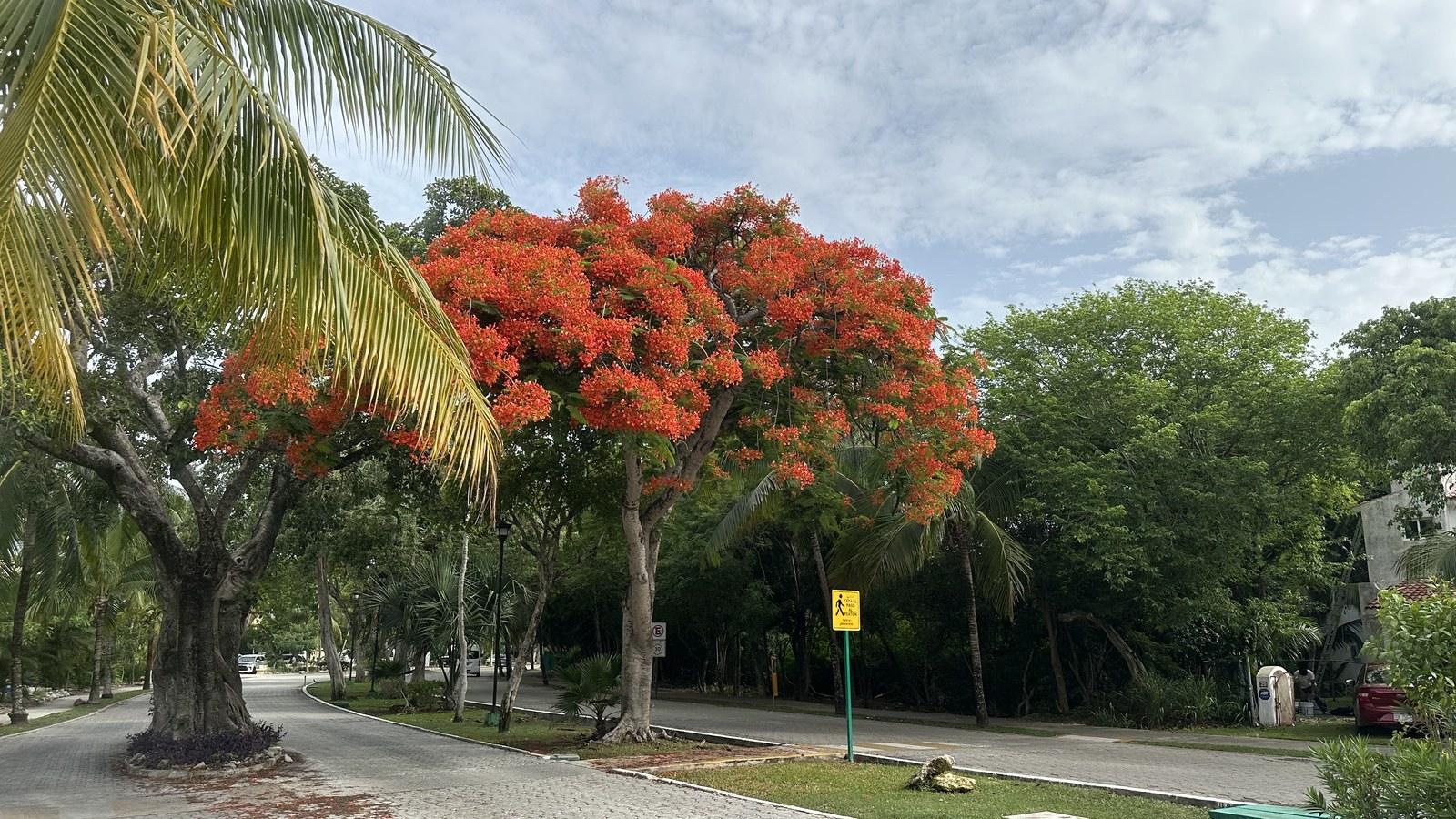
That the master planned community would mature. The trees, the streets, the feeling of being in a finished place and not on a construction site.
That the infrastructure would settle in. Services, access, maintenance.
And that the location would stay good. Five minutes from downtown, next to the ferry pier to Cozumel, with a direct exit onto the federal highway.
Those three things were not in any ad. And they are the ones that stayed.
So how do you choose a place
When you weigh where to put something, you almost always look at what is happening right now: how many people walk by, how good it looks, how fashionable the area is.
That changes, and faster than you expect.
What does not change is the structural part. Whether there is access or there is not. Whether it is close to where people already have to go. Whether the services are there or you have to bring them. Whether the surroundings are still being built or already stopped.
The useful question is not how good it looks today. It is what part of this will still be true in ten years.
And the answer is almost always on the boring list, not the attractive one.
What it also says about holding on
The group that bought the development and put up Phase 2 with its golf course was right about the place. Time proved them right and then some.
What they did not have was the means to wait for it. The devaluation landed mid construction, and ten years were not enough to come back from it.
Your project being good and your being able to carry it are two different things, and both need looking after.
This is not an argument against taking risks. Playacar exists precisely because several people took them, and one of them did not make it. It is an argument for knowing how long you can hold out before you need the project to pay.
And something that holds for the whole region
Playacar is not the only case. The Riviera Maya has had forty years of cycles: booms, corrections, hurricanes, pandemics, sargassum.
The businesses that have been here for decades are not the ones that called the boom. They are the ones that held through the drops.
That says something about how to decide in this region. What pays most is not getting the good moment right, it is being built for the bad one.
Three questions before you settle on a place
What part of this stays true no matter the season? Access, proximity, services. What does not depend on things going well.
What part of my case depends on something that can move? Not to rule it out, but to know how much weight to put there.
And if this area stalls for three years, does my business still work? If the answer depends on the area not stalling, that is where the risk is.
Why this matters now
We are at a point where several areas of the region look different from how they looked three years ago. Some grew, others cooled off.
Anyone deciding where to open, where to move or where to invest is facing the same question they faced in 1979, in 1994 and in 2004.
And judging by how that one turned out, the answer is probably not in whatever looks most attractive today.
At Kiin Hub we have the Mesa Kiin: putting your case in front of people who know different things. Tax and accounting, labor, value proposition, process and technology. If you are weighing where to put something and want another set of eyes on it, bring it.
Share this article