Its founder puts it plainly: he did not have a vision, he had an idea. And every time he learned something, he changed the plan. Forty years on it is worth looking at what came of that.
Half an hour down the federal highway there is a development that started around the same time as Playacar and took the opposite route.
Román Rivera Torres bought seven adjoining parcels, some 320 hectares, and started building. His idea was a gated development on the water with a golf course.
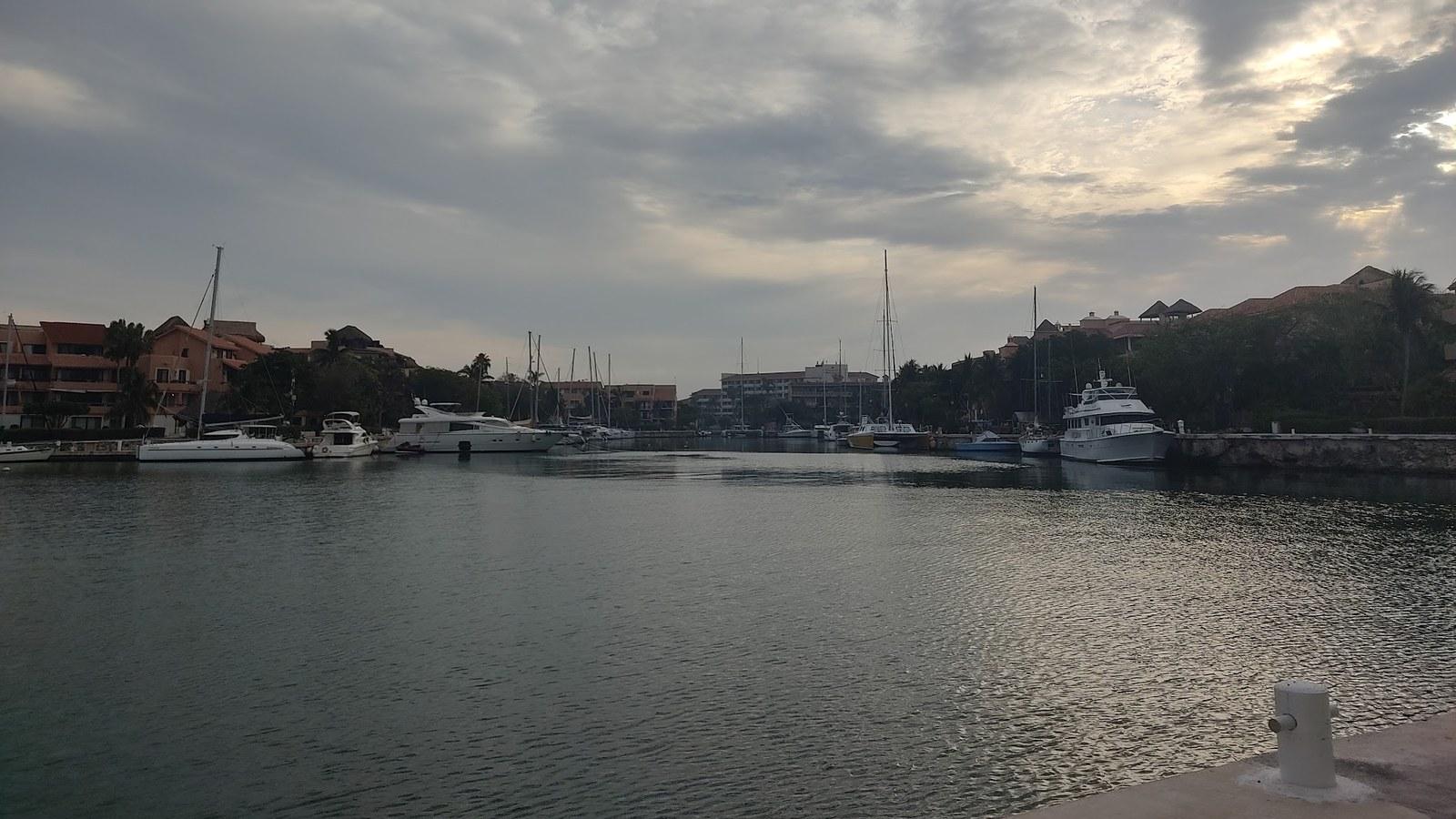
Today Puerto Aventuras has two marinas, close to twenty three thousand people counting the town, and it stayed in his hands until the last lot was sold, around 2024.
Here is how he describes the way it began: "No tuve una visión para ser Puerto, tenía una idea, y se fue armando." I did not have a vision for Puerto, I had an idea, and it came together.
That sounds like an admission of improvising. It is not, and that is the interesting part.
He changed the plan when he got a number
The marina was not in the original project. His former father in law suggested it, and the firm doing the building proposed putting it inland rather than on the coast.
What made the change stick was a number: a lot facing the marina sold for 800 dollars a square meter, and one facing the golf course for 200.
Four times as much for the same ground, depending on what was in front of it.
And it was not only the price. On the marina he was moving three lots a month; on the golf course, one every three months. Nine times the pace, on the more expensive land.
With that number in hand, the plan stopped turning around the golf course and started turning around the water. Nearly two kilometers of canals were dug, and later a second marina and a third.
The distinction matters: he did not change his mind because something else occurred to him. He changed it because he learned what each option was worth.
That is the opposite of improvising.
He found how to pay for the work inside the work
Here is something that barely gets told and is worth more than the whole anecdote.
Digging canals in limestone is not cheap. And he says what it cost him to excavate the marina, he recovered in the value of the material he took out.
The rock that had to be removed to make the canal was construction material that could be sold.
So the cost of building the asset was covered by a byproduct of the work itself.
That is not luck, it is having looked twice. And it applies at much smaller scales: the space you free up can be rented, the process you document for yourself can be sold, the research you did for your own decision is useful to someone else.
The question it leaves is a good one: what are you throwing away today that someone would pay for.
He was short on capital, and it cost him
The other part of the story is less flattering and he does not hide it either.
He had no backing from banks. The project was financed with partners and presales, and every partner who came in made him give something up.
Decades later, control of the development ended up concentrated in a different group from his, and that led to years of conflict between the trust that administers it and the property owners association.
The lesson is not to avoid partners. Without them the project did not exist.
The lesson is to know what you are giving up when outside money comes in, and that this gets decided at the start, while you still have something to negotiate with. Not later, when you already need the check.
What grew outside the plan
The support town was planned for seven thousand people. Today it has thirty nine thousand, by the founder's own account.
And that is a lesson too, an uncomfortable one: a project that works produces things that were never in the plan, and some of them cannot be controlled.
The workers' town was in nobody's master plan, not in Puerto Aventuras and not in Playacar. In both cases it grew faster and with less order than the development that needed it.
Two plans from the same years
And here is what makes this story worth more than an anecdote.
Half an hour down the federal highway, in the same years, Playacar was being developed. With a plan detailed to the last degree, following the Fonatur school, and with dollar debt behind it.
The detailed plan did not survive the 1994 devaluation. The group building it collapsed and took a decade to come apart.
The one that came together as it went stayed in his hands for nearly forty years, until the last lot was sold.
That does not mean planning is bad. Playacar is still there and it is the most established gated community in the city, precisely because the infrastructure was already built when the crisis arrived.
What it says is something else: the plan is not what holds you up. What holds you up is being able to adjust it without breaking while you adjust it.
Four questions it leaves
Which part of your plan is conviction and which part is a number you never went back to check? He switched from golf to marina because he measured. Most plans hold up out of habit.
What are you throwing away that someone would pay for? The material from the canal paid for the canal.
What do you give up if outside money comes in, and have you talked about it already? That gets negotiated at the start, not when it is urgent.
And if your project grows to three times what you planned for, what breaks first? Because it will grow where you least expect it.
At Kiin Hub we have the Mesa Kiin: putting your case in front of people who know different things. Tax and accounting, labor, value proposition, process and technology. If your plan is changing and you want another set of eyes on it, bring it.
Data: Fernando Martí's account in Fantasía de Banqueros, the interview with Román Rivera Torres in Oveja Negra (2026) and INEGI's 2020 Population and Housing Census.
Share this article